
From Risk to Resilience: The Role of Adaptech in Building Stronger Communities
Written by Nicole Toole, Manager of Climate Adaptation and Resilience at MaRS Discovery District & Wynnie Zhao, Manager of Community Climate Adaptation at UN Global Compact Network Canada
As global temperatures approach and are likely to exceed the 1.5°C threshold, climate impacts are intensifying and disproportionally affecting vulnerable communities. Canadians experience climate risk differently depending on multiple intersecting and often compounding social, economic, demographic, and geographic factors that influence both exposure to climate risks and the capacity of individuals and communities to prepare, respond, and recover. With every additional increment of warming, climate-related risks will increase, making the impacts of climate change more frequent and severe.
Flooding is one of Canada’s most pervasive and costly climate hazards, with financial risk and affordability at its centre. Canadians face an estimated $2.9 billion in average annual residential flood losses, while roughly 6% of homes remain ineligible for overland flood insurance. Indigenous communities face disproportionately high exposure, with more than 90% of First Nations reserve lands exposed to some degree of flood risk and up to 22% of on-reserve residential properties at risk.
Lower-income communities often face greater climate risk and have fewer resources to prepare for and recover from impacts. For flooding, this can include rising insurance premiums, limited ability to invest in property-level resilience, and fewer financial resources for recovery. These challenges can intersect with other vulnerabilities: older adults, people with mobility or health issues, and those living alone may face greater difficulty evacuating or accessing essential care. Building climate resilience requires solutions to account for these intersecting vulnerabilities.
This is where climate adaptation technologies, also known as adaptech, have a fundamental role to play in strengthening community and economic resilience. Adaptech encompasses the technologies and solutions that support communities, infrastructure, and the economy to anticipate, withstand and recover from the impacts of climate change. In Canada, however, these solutions have yet to reach the consumer and market adoption needed to keep pace with growing climate risks. This can leave people, communities, business, and the economy increasingly exposed to impacts they are not adequately equipped to manage.
Adaptech ventures in action
Canadian adaptech ventures are proving a powerful force in countering climate risks. Ventures in this space are developing innovative solutions that reduce physical risks, lower financial consequences and improve accessibility to resilience solutions, often through direct partnerships with leaders and institutions in climate-risk heightened communities.
Initiatives such as MaRS’ Adaptech Accelerator, anchored by Definity Insurance, supports Canadian ventures to validate, commercialize, and scale adaptation technologies by accelerating market adoption and connecting them with the communities and businesses seeking solutions to strengthen their climate resilience. However, innovative technologies are only one part of the solution to addressing the impacts of climate change. As we look forward to strengthening Canada’s climate innovation ecosystem, it’s fundamental that solutions are grounded in local realities and accessible to communities experiencing heightened climate risk. A solution that succeeds in one context may not translate directly to another without considering factors such as community priorities, local capacity, and social and economic conditions. One important pathway to ensuring solutions are locally relevant is through meaningful partnerships that draw on local knowledge and build trust that help to enable customer and market adoption.
ZS2 Technologies
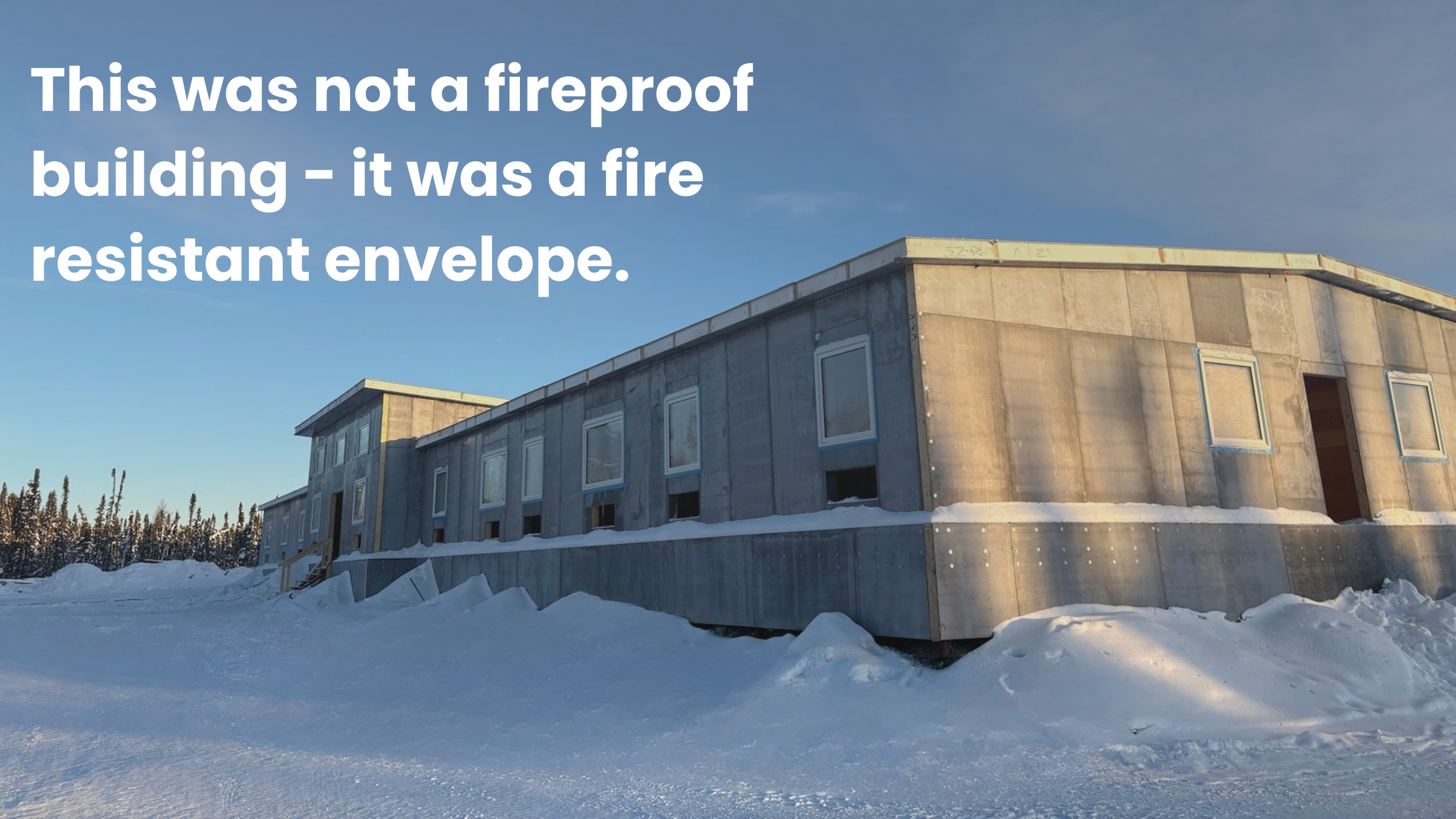
Calgary-based ZS2 Technologies developed a carbon capture magnesium cement that is resistant to wildfires, flood, mold, and extreme winds. Its innovative construction material is already being used to rebuild homes in Jasper to reduce future wildfire threats.
As an example of how adaptech ventures can help communities build climate resiliency, ZS2 recently partnered with the Tataskweyak Cree Nation and SEKO Construction in the remote community of Split Lake, Manitoba to develop a 9,766-square-foot transitional housing centre designed to meet the demands of the region’s extreme northern climate which include temperatures below -30°C and heightened wildfire risk. The nearly completed centre used ZS2’s prefabricated TechPanel system for its walls, floors and roof, and just before completion in June of 2025, a fast-moving wildfire devastated the community, meanwhile the transitional housing center remained standing and virtually unscathed.
This is just one example of ZS2 working with communities that experience a heightened climate risk and vulnerability. ZS2 also has a strong working relationship with the Minigoziibe Anishinabe (formerly known as the Pine Creek First Nation), who recently became a strategic investor in the company to help accelerate the adoption of climate resilient building materials in remote Canadian communities.
Chief Derek Nepinak described the more regular impacts of climate change his community faces and the value of working with ZS2 Technologies: “The Minegoziibe Anishinabe is a First Nations community experiencing climate change effects in real time. We sit on the edge of the boreal forest and in the last few years have experienced evacuation due to wildfires and sudden flooding events in our region. The partnership with ZS2 allows us to obtain materials that are ready to help us mitigate the effects of climate change in our housing and local public infrastructure. These materials help us restore confidence with our community as we move into an uncertain future.”
NOAH Intelligence
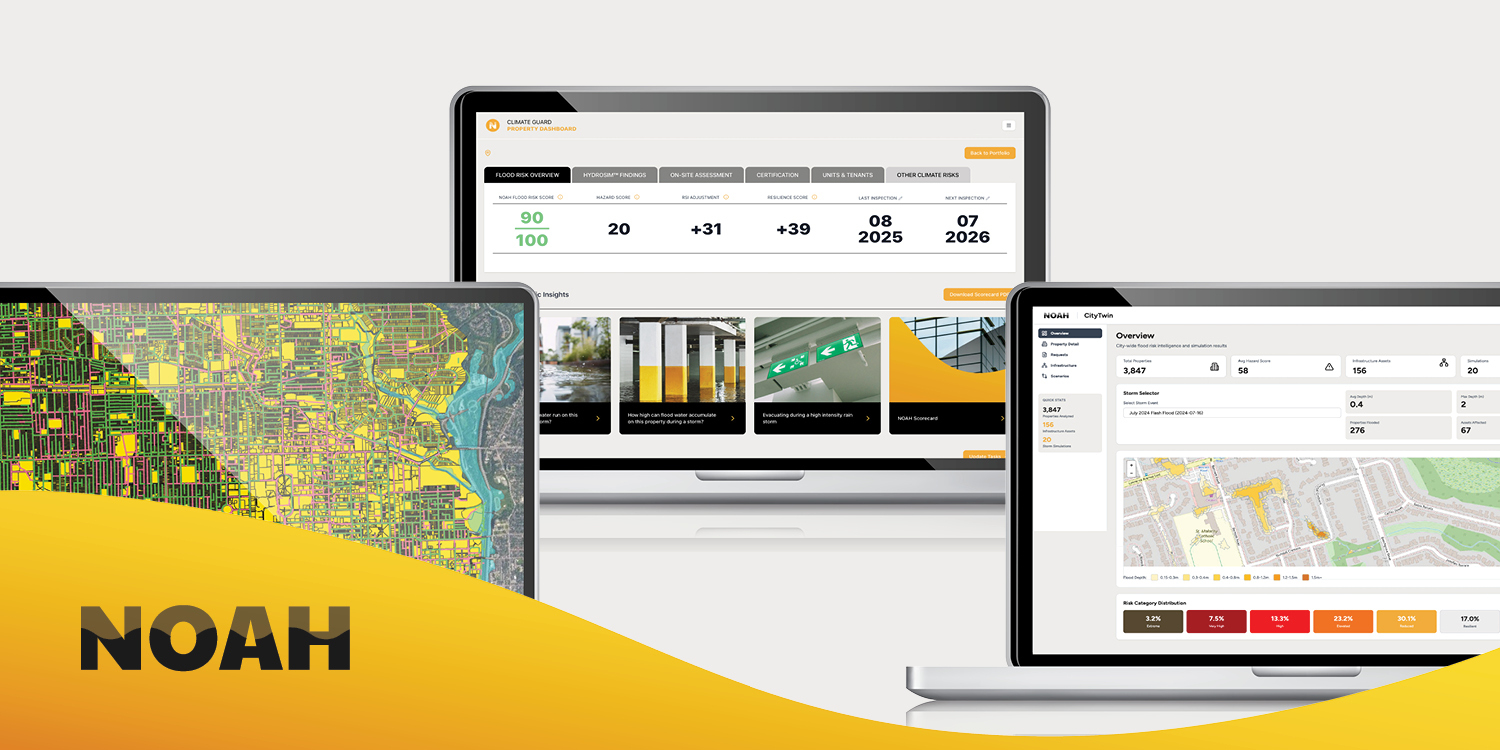
Another Canadian venture, Toronto-based NOAH Intelligence, is proving the power of community-based partnerships in closing the climate resilience gap. Its property-level flood risk analysis tool offers both modelling solutions for insurance and financial providers as well as property-level resiliency measures.
NOAH recently partnered with a Toronto community land trust that owns more than 500 single family homes across the east end and Scarborough to identify which were at highest exposure to flood risk, ultimately identifying 29 as highly vulnerable. The company then provided a series of resiliency recommendations tailored to each property.
Community land trusts steward land and housing for long-term community benefit, with deep ties to the residents and neighbourhoods they serve. By working directly with a local land trust, NOAH was able to apply its technology to a specific resilience challenge: making affordable family-sized housing in older buildings more climate resilient.
This is just one example of ZS2 working with communities that experience a heightened climate risk and vulnerability. ZS2 also has a strong working relationship with the Minigoziibe Anishinabe (formerly known as the Pine Creek First Nation), who recently became a strategic investor in the company to help accelerate the adoption of climate resilient building materials in remote Canadian communities.
“For a land trust running deeply affordable housing, a flood threatens tenants’ safety and belongings, damages irreplaceable stock, and drives insurance costs that come straight out of the money holding rents down,” explained Chris Godsall, CEO of NOAH. “This is some of the last family-sized affordable rental stock in the city, and it is older housing of exactly the type most exposed to basement backup.”
Building a resilient and inclusive economy
Canadian adaptech ventures demonstrate the important role innovation can play by developing and commercializing technologies that respond to the evolving needs of communities facing climate risk. Ventures like ZS2 and NOAH can help reduce physical and financial vulnerabilities while opening new markets for Canadian innovation. Overall, ventures have an important role to play in bringing innovation, investment, and resources to this work, while ensuring efforts are grounded in community needs and local realities.
The collaborative experience of ZS2 and NOAH reinforces a broader lesson, that meaningful climate adaptation and resiliency are not simply about developing new solutions to respond to climate risk. It’s also about understanding where and how those solutions can create meaningful benefits for people and communities as the impacts of climate change evolve.
This is one of the many learnings coming out of the UN Global Compact Network Canada’s ongoing project, Corporate Climate Adaptation and Community Impact: An Intersectional Approach, supported through Natural Resources Canada’s Climate Change Adaptation Program (CCAP).
Building on this research and the lessons emerging from this project, the UN Global Compact Network Canada is launching an upcoming toolkit including an insights report, case studies, and practical tools designed to help businesses move from principles to action and develop adaptation initiatives that are more locally informed, inclusive, and effective.
About UN Global Compact Network Canada
With over 20,000 businesses committed in over 160 countries, the UN Global Compact Network is the world’s largest corporate sustainability initiative. For 25 years, it has provided a principles-based framework to help companies operate responsibly and create long-term value for stakeholders and society. The UN Global Compact Network Canada is dedicated to advancing the Ten Principles in human rights, labour, environment, and anti-corruption as well as the Sustainable Development Goals. Network Canada brings together 200+ Canadian businesses as part of a global movement dedicated to sustainable and ethical business practices, driving systemic change and fostering a more sustainable future.
About MaRS
MaRS Discovery District is a charitable organization and one of North America’s largest urban innovation hubs, helping Canadian science and technology companies commercialize and scale. Building on a 25-year legacy of supporting founders, MaRS connects ventures with capital, customers, talent and expertise — through venture programming and partnerships, MaRS IAF (one of Canada’s most active seed-stage venture funds), MaRS Connect (a live digital marketplace linking commercially ready ventures with buyers, partners and sources of capital), and more than 1.5 million square feet of world-class lab, office and event space across the MaRS Centre and MaRS Waterfront in downtown Toronto. Since 2010, MaRS-supported ventures have generated $11.5 billion in cumulative revenue, raised $19 billion in funding and created and maintained more than 33,000 jobs. For more information, visit marsdd.com.
Written By

Nicole Toole
Manager of Climate Adaptation and Resilience at MaRS Discovery District

Wynnie Zhao
Manager of Community Climate Adaptation at UN Global Compact Network Canada
21 September 2026
Let's Make A
Positive Impact Together!
If you're interested in joining the UN Global Compact and tapping into its vast network in Canada, we invite you to take the next step. Become a Participant and help lead the charge to advance sustainable development and social responsibility with us.
Join Today© UN Global Compact Network Canada | Website by Mediasuite